Tracing in Art: A Comprehensive Guide for the Modern Artist
Ah, tracing. Is it cheating? A dirty little secret? Or a totally legit tool? Let's figure it out. This guide will walk you through the good, the bad, and the legal side of tracing in art, minus the confusing art-school jargon.
The Great Tracing Debate
The argument that tracing is "cheating" comes from the idea that it's a shortcut. You're skipping the hard work of learning to draw from scratch, training your eye to see and your hand to draw. For some, getting praise for a drawing you didn't do freehand feels fake, like you're just filling in a coloring book.
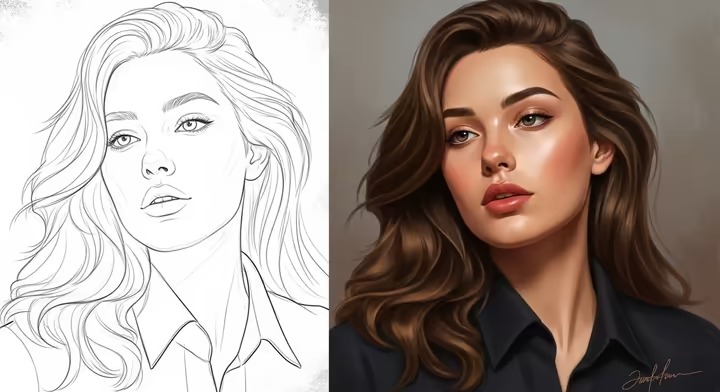
But lots of pros use tracing! For a commercial illustrator on a tight deadline or a painter who wants to focus on color, it's a huge time-saver. They can trace the basic composition to get to what they consider the "real" work of painting and texturing.
So, what's the verdict? It really depends on your goal. If you want to learn freehand drawing, then yeah, relying on tracing all the time won't help. But if you just want to finish a painting or try a new medium, it's a perfectly good tool.
Old Masters: The Original Tracers?
The modern idea that tracing is a no-no is pretty new. For centuries, many of history's most famous artists used all sorts of gadgets to get the job done. They saw these tools as new technology, not cheating.
Vermeer's Secret Weapon
Artist David Hockney and physicist Charles Falco had a theory, that many Old Masters, starting in the 1400s, used mirrors and lenses to project images onto their canvases. Then they just... traced them. The Dutch master Johannes Vermeer is the main suspect.
His paintings look almost like photos. The shiny bits break up into little blobs of light, just like you'd see through a camera lens. Plus, he almost never left behind any sketches, which suggests he might have drawn directly on the canvas with a projection.
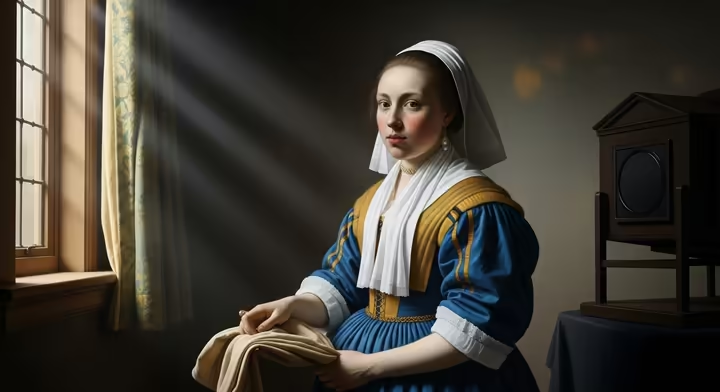
Hockney thought other artists did it too, like Ingres (who used a camera lucida, a prism gadget) and even Jan van Eyck with his famous Arnolfini Portrait . The point isn't that these painters were frauds. They were smart and used the best tech they had.
Pantographs, Prints, and Professionals
Artists have used mechanical tools for ages. The pantograph, invented in 1603, is a cool contraption of jointed rods that lets you copy a drawing, making it bigger or smaller. It was a standard tool in studios.
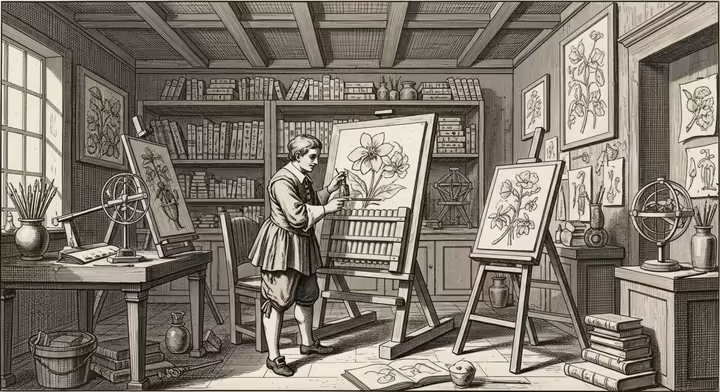
And think about it, printmaking is ALL about transferring images. Woodcuts, engravings, lithography, you have to get the drawing onto the printing block or plate somehow. Even modern artists like Robert Rauschenberg got in on it, using solvents to lift images from magazines and transfer them to his work.
So, yeah. Transferring images has been a normal part of art for a long, long time. The modern freak-out about tracing is a bit out of place when you look at history.
The Modern Artist's Tracing Toolkit
Today's artists have more tracing options than ever, from old-school tricks to fancy digital software.
Paper, Windows, and Lightboxes
The classic method? A sheet of tracing paper. Or, you can use the old-school trick of taping your source image and a blank sheet of paper to a brightly lit window. Voila, a natural lightbox.
For surfaces you can't see through, like a canvas or wood panel, you need transfer paper. It's basically carbon paper for artists. You can even make your own by scribbling all over the back of your drawing with a soft graphite pencil.
The modern, high-tech window is an LED lightbox. They're slim, bright, and super handy. But watch your posture! Don't hunch over it for hours, prop it up on an angle and take regular breaks to stretch your neck and back.
The Digital Canvas
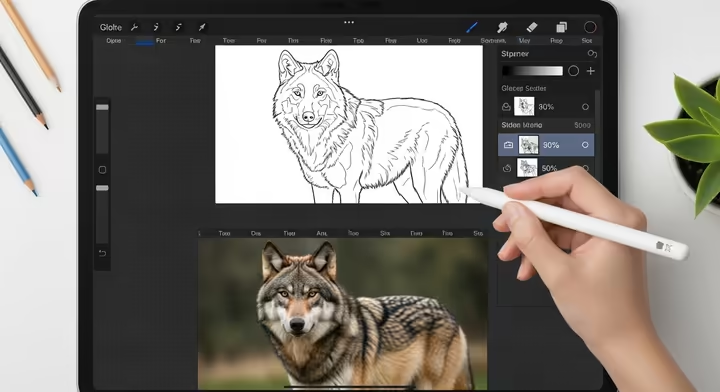
Digital art makes tracing a breeze. In apps like Procreate or Photoshop, you just put your reference image on one layer, lower its opacity (make it see-through), and draw on a new layer on top. Mistakes are easy to erase without messing up your reference.
Mural artists use digital projectors to blow up their sketches onto a giant wall. Just point, trace the main lines, and get to painting. For safety, just avoid staring right into the projector's beam.
Feeling extra efficient? Software like Adobe Illustrator can auto-trace an image for you. It turns a regular picture (like a JPG) into a clean, scalable vector drawing. It’s a huge time-saver, but the results usually need a little manual cleanup.
Just remember to protect your eyes from digital strain. Follow the 20-20-20 rule, every 20 minutes, take a 20-second break to look at something 20 feet away. Your eyes will thank you.
How Tracing Actually Helps You Learn
Tracing isn't just passive copying. When you do it with a purpose, it can actually speed up your learning. Think of it as educational scaffolding, temporary support that helps you learn skills you're not quite ready for on your own.
Training Your Hand and Eye
On a basic level, tracing is a physical exercise. It builds muscle memory for the smooth, controlled movements you need for freehand drawing. When you trace a complex curve, you're physically rehearsing how to draw it.
It's the same reason little kids trace the shapes of letters to learn how to write. Your brain has a natural link between seeing an action and doing it. By physically tracing a form, you're teaching your body how to make that shape.
Breaking Down Hard Drawings
Tracing also helps you analyze something complex without getting overwhelmed. Trying to draw a person from life is hard, you have to juggle proportion, anatomy, and perspective all at once. Tracing lets you focus on one thing at a time, like just the outline.
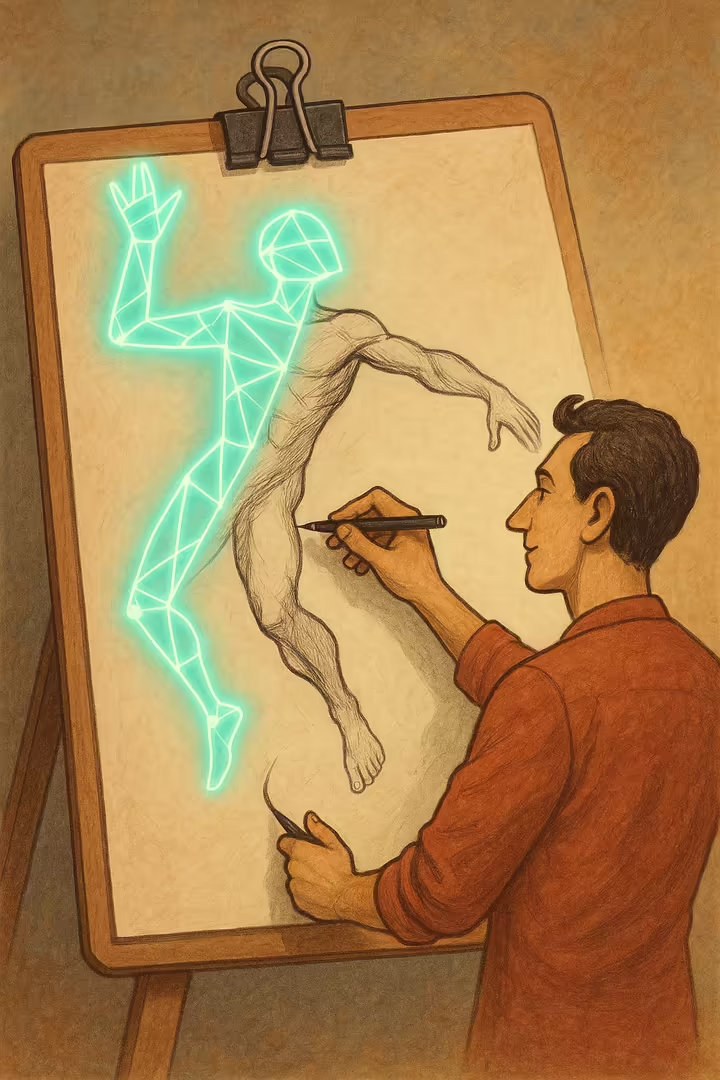
This makes tracing a great study method. You can trace a master drawing to understand the anatomy, or trace a photo to see how a tricky angle really works. It helps you understand tough concepts like perspective through direct experience.
But here's the catch, you have to *think* while you trace. Mindlessly following lines won't teach you much. You have to actively ask "Why does this line curve here?" That kind of active engagement turns tracing from a copy-paste job into a real study session.
Don't Get Sued: Tracing and Copyright
This part is really important. While the ethics of tracing are up for debate, the law is pretty clear. If you trace someone else's copyrighted photo or art and then try to share or sell it, you could be in big trouble.
Your traced drawing is legally a "derivative work." According to copyright law, only the original creator has the right to make or authorize derivative works. Making small changes isn't enough to get around it if your piece is still "substantially similar" to the original.
The main exception is "fair use." Tracing a copyrighted image for your own private study at home, which you never show to anyone, is almost certainly protected under fair use. This is where tracing is most valuable for learning anyway.
But the fair use defense gets weak the moment your art goes public. Posting a traced piece on Instagram or selling prints on Etsy can be copyright infringement. And no, just giving "credit" to the original artist is not a legal substitute for getting permission.
So, how do you stay safe? For any work you plan to show or sell, use your own photos, use images from the public domain (like art from long-dead artists like da Vinci), or use images from royalty-free sites that grant permission for commercial use. If you're set on using a specific copyrighted image, you must get permission from the creator first.
| Scenario | Legally Permissible? | Key Considerations & Best Practices |
|---|---|---|
| Tracing a photograph you took yourself for a painting you plan to sell. | Yes. | You own the copyright to both the photo and the painting. You're good to go. |
| Tracing a copyrighted photo from the internet for private study at home. | Almost certainly yes. | This is a classic example of "fair use" for personal education. It's private, non-commercial, and doesn't hurt the original creator's market. |
| Tracing a copyrighted photo and posting the finished artwork on your Instagram. | Risky; likely infringement. | Public display is one of the original creator's exclusive rights. Get permission before you post, or risk a takedown notice. |
| Tracing a copyrighted photo and selling prints of your artwork on Etsy. | No; clear infringement. | This is commercial use that harms the market for the original. It's a textbook copyright violation. |
| Tracing a drawing by Leonardo da Vinci (d. 1519) and selling it. | Yes. | The work is in the public domain. The copyright expired centuries ago. Go for it. |
| Tracing a photo from a "royalty-free" stock site (e.g., Unsplash, Pexels) for a commercial project. | Generally yes, but check the license. | Always read the specific license terms for each image. Some may have restrictions or require you to give credit. |
Who Else Uses Tracing? (Lots of People!)
Tracing pops up in all sorts of professional and therapeutic fields. It’s not just about copying, it's a tool to translate, refine, and transform ideas.
Remember tracing your hand to make a Thanksgiving turkey as a kid? That simple activity teaches children about space and shapes, and helps develop motor control. It’s a classic for a reason.
In art therapy, "body tracing" is a powerful technique. A client's entire body is traced on a large sheet of paper, and they use the outline to map out emotions, sensations, or trauma. It’s a safe way to express things that are hard to talk about.
Before computers, architects lived on tracing paper, layering drawings to refine their plans. That exact workflow is now built into digital CAD software. Botanical illustrators trace their field sketches to perfect a composition before starting the final, delicate painting.
Animation owes a huge debt to tracing. Rotoscoping, invented in 1915, is a technique where animators trace over live-action film, frame by frame. Disney used it for characters in Snow White and the Seven Dwarfs , and it’s how they made the lightsabers glow in the original Star Wars films.
Taking Off the Training Wheels
The goal is to eventually draw confidently on your own, right? Think of tracing as the "training wheels" for your art. Here's a plan for how to gradually take them off.
A great exercise is to first trace a subject. Then, try to draw it freehand while looking at the original reference. Finally, lay your tracing over your freehand drawing. This gives you immediate, clear feedback on where your proportions or lines went wrong.
The grid method is a fantastic middle step. You draw a grid over both your reference image and your drawing paper. Then you just focus on copying the contents of one square at a time. It gives you support for placement but still makes you actively observe and draw the shapes.
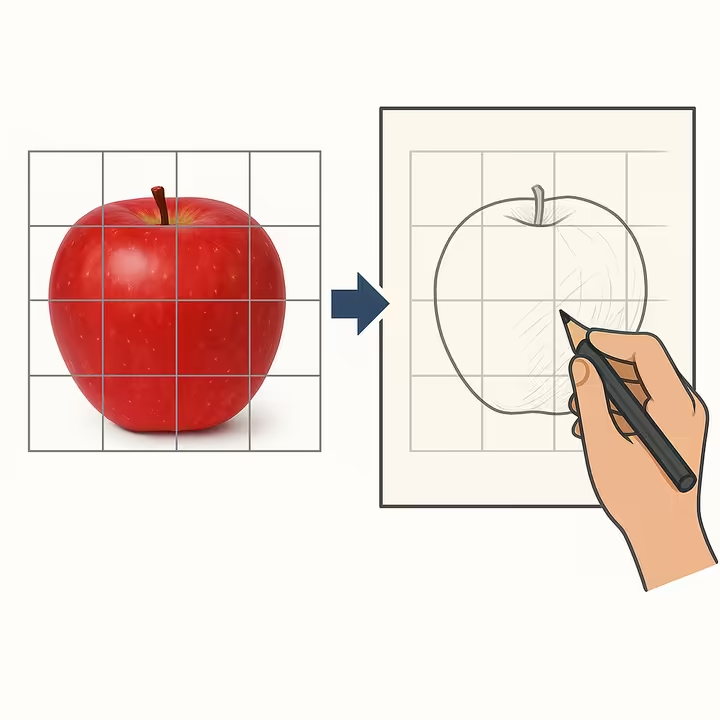
You can even make the grid bigger over time, forcing you to rely more on your own eye. Each of these methods is a step away from full support, leading you down a clear path toward true artistic independence.
Conclusion
So, is tracing cheating? Nope. It's a tool, a versatile and neutral one. Its value is all about how and why you use it. The stigma against it is a modern thing, totally contradicted by a long history of use by pros and masters.
For a beginner, tracing is a powerful learning tool. When used thoughtfully for private study, it’s a legally sound and effective way to build motor skills, understand complex subjects, and gain confidence.
The trick is to use tracing as a deliberate step on a longer journey. The goal isn't to become a perfect tracer, but to use every tool you can to develop your own unique artistic skills.
Works cited
- Is tracing in art wrong? Is tracing a photo illegal? Is there cheating, https://drawingwithpri.art/blogs/blog/tracing-in-art
- Is It Cheating To Trace? - SKH Portraits, https://skhportraits.co.uk/is-it-cheating-to-trace/
- Is Tracing In Art Cheating Or Simply A Means To An End? - Squishing Paint, https://squishingpaint.com/is-tracing-in-art-cheating/
- Is Tracing in Art Cheating | Online Art Lessons, https://onlineartlessons.com/tutorial/is-tracing-in-art-cheating/
- Is It CHEATING to TRACE in Art? - YouTube, https://www.youtube.com/watch?v=AcSohBqJnrY&pp=0gcJCdgAo7VqN5tD
- Camera Obscurities | American Scientist, https://www.americanscientist.org/article/camera-obscurities
- Agents of Change: Camera Obscura - Artland Magazine, https://magazine.artland.com/agents-of-change-camera-obscura/
- Did early Renaissance painters trace optical projections? Evidence pro and con, https://www.researchgate.net/publication/253341392_Did_early_Renaissance_painters_trace_optical_projections_Evidence_pro_and_con
- Did early Renaissance painters trace optically projected images? The conclusion of independent scientists, art historians and artists - The Diatrope Institute, https://diatrope.com/stork/StorketalCRCBook.pdf
- A Closet Wholly Shut From Light. Vermeer and the Camera Obscura - Young Ocean, https://sunfaceman.medium.com/untitled-32738bf1b2b1
- Illusions Near and Far: Technology - Teacher Resources - Milwaukee Art Museum, http://teachers.mam.org/resource/kohls-illusions-technology/
- Vermeer and the Camera Obscura, Part One, https://www.essentialvermeer.com/camera_obscura/co_one.html
- Who used the camera lucida? - NeoLucida, https://neolucida.com/who-used-the-camera-lucida
- The Pantograph - Graphic Arts - Princeton University, http://www.princeton.edu/~graphicarts/2008/09/the_pantograph.html
- Pantographs | National Museum of American History, https://americanhistory.si.edu/collections/object-groups/pantographs
- Illustration Techniques - ::: Historical Book Arts ::: - University of Washington, https://content.lib.washington.edu/historicalbookartsweb/illustech.html
- Lithography - Wikipedia, https://en.wikipedia.org/wiki/Lithography
- Rauschenberg Image Transfers - Harn Museum of Art - University of Florida, https://harn.ufl.edu/resources/rauschenberg-image-transfers/
- Transfer Drawings - Robert Rauschenberg Foundation, https://www.rauschenbergfoundation.org/art/lightboxes/transfer-drawings
- Exploring Transfer Techniques for Creative Expression - Number Analytics, https://www.numberanalytics.com/blog/exploring-transfer-techniques-for-creative-expression
- Transfer printing | Screen Printing, Heat Transfer & Sublimation - Britannica, https://www.britannica.com/art/transfer-printing
- Traditional Transfer Techniques in Western European Art - Google Arts & Culture, https://artsandculture.google.com/story/traditional-transfer-techniques-in-western-european-art-the-j-paul-getty-museum/KwWxS3QhYYDD4g?hl=en
- Six Simple Art Tracing Methods - Ridge Light Ranch, https://ridgelightranch.com/six-art-tracing-methods/
- The Art of Tracing: A Step-by-Step Guide - Number Analytics, https://www.numberanalytics.com/blog/the-art-of-tracing
- Preparation and Set-up - BOTANICAL ART & ARTISTS, https://www.botanicalartandartists.com/preparation-and-setup.html
- 4 Tracing Hacks Every Watercolor Artist Needs to Know - YouTube, https://www.youtube.com/watch?v=HX7_mneVxNM
- Light Boxes and Drawing Aids, Should I Use Them? | Jerry's Artarama, https://www.jerrysartarama.com/blog/light-boxes-drawing-aids-jerrys-live-episode-54/
- Using A Lightbox For Watercolour Painting - Urban Sketching World, https://urbansketchingworld.com/lightbox-for-watercolour-painting/
- Ergonomics - Crop Art, https://www.cropart.com/PDFS/Ergo.pdf
- Ergonomics for Artists: How to Paint Comfortably & Sustainably for Longevity - Evolve Artist, https://evolveartist.com/blog/ergonomics-for-artists/
- How to Do an Anatomy Tracing - Proko, https://www.proko.com/course-lesson/how-to-do-an-anatomy-tracing/notes
- How To Set Up a Projector in Your Art Studio For Tracing: 7 Easy Steps | NexiGo, https://www.nexigo.com/blogs/conversation/how-to-set-up-a-projector-in-your-art-studio-for-tracing-7-easy-steps
- Frequently Asked Questions about laser light show safety, regulations and requirements - LasershowSafety.info, https://www.lasershowsafety.info/faq.html
- Projection General - High brightness and laser illuminated projector safety - Barco, https://www.barco.com/en/support/training/projection/events-proav-projection/projection-general-high-brightness-and-laser-illuminated-projector-safety
- Autotracing - Glossary - DevX, https://www.devx.com/terms/autotracing/
- www.devx.com, https://www.devx.com/terms/autotracing/#:~:text=Autotracing%20works%20by%20analyzing%20the,representation%20of%20the%20original%20image.
- Eyestrain: Causes, Tips for Prevention, and Treatments - Healthline, https://www.healthline.com/health/eye-health/eye-strain
- Effective Strategies to Prevent Digital Eye Strain, https://garibaldieyecare.com/blog/how-to-protect-your-eyes-from-screens/
- The Top 7 Reasons to Teach Tracing - Ridge Light Ranch, https://ridgelightranch.com/reasons-to-include-tracing/
- What do you guys think about Tracing as a means to learn and otherwise? - Reddit, https://www.reddit.com/r/learnart/comments/4dmft2/what_do_you_guys_think_about_tracing_as_a_means/
- Why Learn to Draw When You Can Trace? - Vitruvian Fine Art Studio, https://vitruvianstudio.com/blog/why-learn-to-draw-when-you-can-trace/
- Is Tracing Educational? - Storypod, https://www.storypod.com/blogs/what-comes-next/is-tracing-educational
- Albert Bandura's Social Learning Theory - Simply Psychology, https://www.simplypsychology.org/bandura.html
- A first step in learning by imitation, baby brains respond to another's actions | UW News, https://www.washington.edu/news/2013/10/30/a-first-step-in-learning-by-imitation-baby-brains-respond-to-anothers-actions/
- Imitation - Open Encyclopedia of Cognitive Science, https://oecs.mit.edu/pub/71jcl5ki
- Expert Columns: What is Imitation and Why is it Important? - May Institute, https://www.mayinstitute.org/news/acl/asd-and-dd-child-focused/what-is-imitation-and-why-is-it-important/
- Learning from Examples: Imitation Learning and Emerging Cognition - Humanoid Robotics and Neuroscience - NCBI Bookshelf, https://www.ncbi.nlm.nih.gov/books/NBK299030/
- Drawing: A Tool For Learning Anatomy - PhysioDC, https://www.physiodc.com/drawing-a-tool-for-learning-anatomy/
- Acquisition of cognitive skill - ACT-R - Carnegie Mellon University, http://act-r.psy.cmu.edu/wordpress/wp-content/uploads/2012/12/63ACS_JRA_PR.1982.pdf
- Is Tracing Over Art Illegal? What Artists Need to Know - Artistry Education Hub, https://art-classes.co.uk/is-tracing-over-art-illegal-what-artists-need-to-know
- Copyright Issues for Artists - Bellevue Fine Art Reproduction, https://www.bellevuefineart.com/copyright-issues-for-artists/
- Circular 14: Copyright in Derivative Works and Compilations, https://www.copyright.gov/circs/circ14.pdf
- Derivative Works Under U.S. Copyright Law, https://www.nolo.com/legal-encyclopedia/derivative-works-under-u-s-copyright-law.html
- Fair Use (FAQ) | U.S. Copyright Office, https://www.copyright.gov/help/faq/faq-fairuse.html
- ELI5: At what point does tracing someone else's image become copyright infringement? : r/explainlikeimfive - Reddit, https://www.reddit.com/r/explainlikeimfive/comments/4xzzz4/eli5_at_what_point_does_tracing_someone_elses/
- Is it legal to trace source imagery? - the artist's J.D., https://theartistsjd.com/trace-source-imagery/
- Is Tracing a Photo Copyright Infringement? - Bytescare, https://bytescare.com/blog/is-tracing-a-photo-copyright-infringement
- How to Incorporate Tracing into Your Art Curriculum - Ridge Light Ranch, https://ridgelightranch.com/teach-tracing-art-curriculum/
- Handprint drawing tutorial: 17 Cool hand drawing ideas, https://artistro.com/blogs/news/how-to-draw-animals-with-your-hands-totally-cool-handprint-drawing-ideas-for-you-and-your-kids
- Easy Handprint Art Ideas for Kids - Hands-On Teaching Ideas, https://teachingideas.ca/2018/10/16/handprint-art/
- Easy Handprint Art Project (For Kids Who "Hate Art") - What Do We Do All Day, https://www.whatdowedoallday.com/easy-handprint-art-project/
- Hand Tracing Craft - Pinterest, https://www.pinterest.com/ideas/hand-tracing-craft/895561047905/
- Creative Hand Tracing Art Ideas for Kids | Easy Step by Step Drawing Projects - YouTube, https://www.youtube.com/watch?v=ac9Gv09m53E
- Body mapping | Art Therapy Class Notes - Fiveable, https://library.fiveable.me/art-therapy/unit-3/body-mapping/study-guide/HIeVLzxfqX2vx9mf
- Body Mapping for Difficult Life Experiences - University of Denver, https://www.du.edu/4D-experience/resources/body-mapping
- Body Tracing - Ideas For Therapy - WordPress.com, https://ideasfortherapy.wordpress.com/2013/10/20/body-tracing/
- eatingdisorderspecialists.com, https://eatingdisorderspecialists.com/art-therapy-help-eating-disorder-recovery/#:~:text=Body%20tracing%20is%20when%20you,emotions%20and%20feelings%20you%20see.
- How Does Art Therapy Help in Eating Disorder Recovery?, https://eatingdisorderspecialists.com/art-therapy-help-eating-disorder-recovery/
- The discipline of tracing in architectural drawing - Sign in, https://pure.manchester.ac.uk/ws/files/62440987/Discipline_20of_20Tracing_20LUCAS_20EDIT_2015_11_16.pdf
- What is Ray Tracing and Its Uses in Architectural Visualization - McLine Studios, https://mclinestudios.com/ray-tracing-in-architecture/
- How to draw botanical in an easy way! - Yvonne Morell, https://www.yvonnemorellsblog.com/draw-botanical/
- Rotoscoping - Wikipedia, https://en.wikipedia.org/wiki/Rotoscoping
- Rotoscoping Animation: A Comprehensive Guide - Garage Farm, https://garagefarm.net/blog/rotoscoping-animation-a-comprehensive-guide
- Rotoscoping: A History & Timeline - YouTube, https://www.youtube.com/watch?v=6kFmUUC1JTs
- All About Rotoscoping: Concept, History and Application, https://www.videoproc.com/resource/rotoscoping.htm
- sequential art - mister chad, https://mister-chad.com/animation/sequential+art