A Beginner's Guide to Safely Cleaning an Oil Painting at Home
So you've got an old oil painting that looks a bit... grimy. Before you grab the Windex and a sponge (please don't!), read this. We'll walk you through how to safely clean it at home, and more importantly, when to just leave it to the pros.
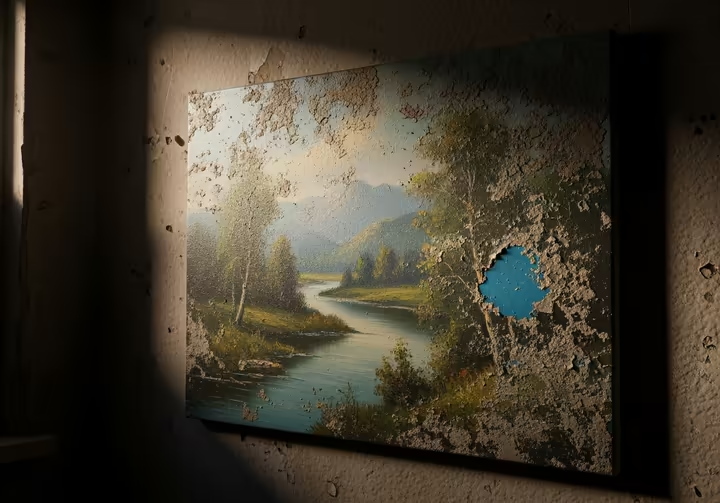
First Rule: When to Do Nothing
Cleaning an oil painting is a big deal. The number one rule is "do no harm." Seriously, sometimes the best thing you can do for a painting is... nothing at all.
Any attempt to clean it can cause permanent damage, often in ways you can't see right away. Even plain water is risky. It can weaken the paint, make it cloudy, and seep into tiny cracks, causing the canvas to shrink and the paint to flake right off. Yikes.
A professional conservator's job is to stabilize the artwork and preserve what the artist intended. Your main job is to figure out if the painting is stable enough to even be touched.
Look for Flakes and Cracks
A network of fine cracks (that's "craquelure," if you want to be fancy) is a normal part of how paintings age. But you need to spot the difference between stable cracks and active damage.
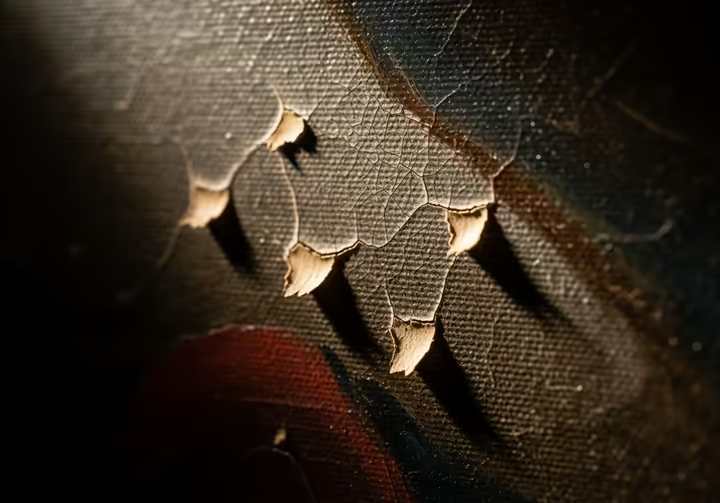
The real danger is when you see paint lifting up in little "tents" or actively flaking off. If you see this, STOP. Don't even try to dust it, as even the lightest touch can sweep away tiny, irreplaceable flakes of paint.
Any painting with flaking or tenting paint is extremely fragile. It should be stored flat, face-up, and handled only by a professional who can re-secure the paint.
Is It Valuable?
If the painting is worth a lot of money, is historically important, or is a cherished family heirloom, don't touch it. The risk of ruining its value is just too high. This is a job for a professional, period.
Dirt or Damaged Varnish?
The only thing you should ever try to clean at home is loose surface grime, like household dust. Often, that yellowed, hazy look isn't dirt at all. It's the old varnish layer, which is a protective coating that has yellowed over many decades.
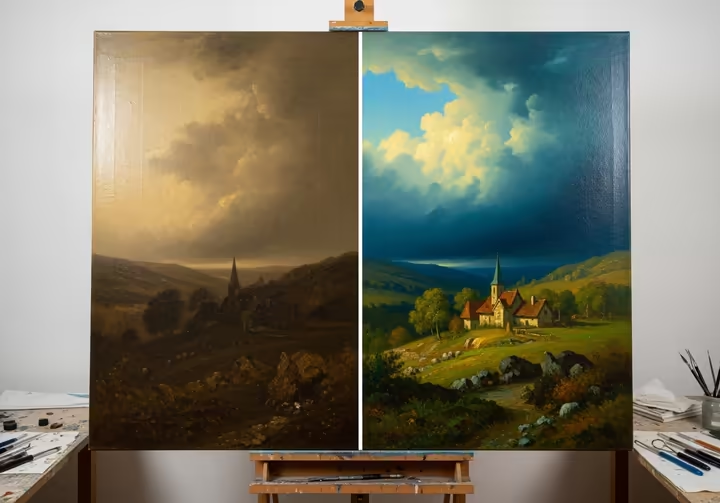
You can't "clean" yellowed varnish with soap and water, and trying to remove it with stronger chemicals will almost certainly destroy the paint underneath. Varnish removal is a tricky chemical process for professionals only.
Know Your Painting (And Its Grime)
Before you touch anything, take a good, hard look at the painting. Its condition will tell you what to do next (or what not to do).
Varnished or Not?
First, figure out if the painting has a varnish layer, which is a clear coat that protects the paint. Hold the painting at an angle to a light source to check the surface.
A varnished painting will usually have a relatively even, all-over sheen. An unvarnished one often looks patchy, with some spots glossy and others matte, because different oil pigments dry to different finishes.
The All-Important Spot Test
This is your most critical safety check. Find a tiny, hidden spot on the painting, like a bottom corner or on the edge where the canvas wraps around the frame.
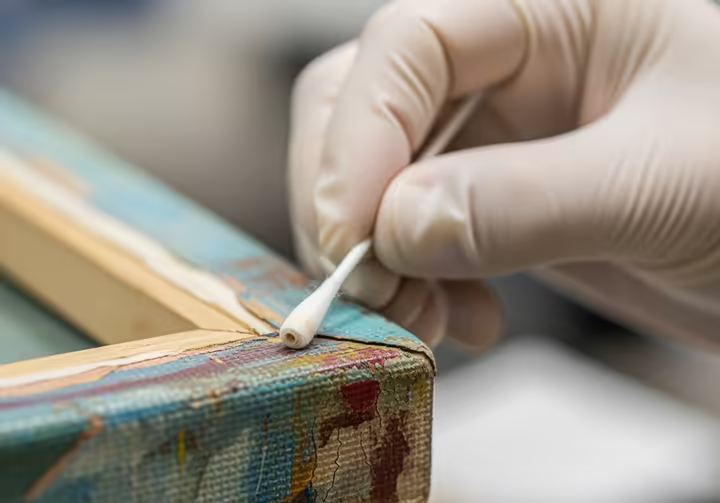
Take a cotton swab and dampen it very slightly with distilled water (it should be damp, not dripping wet!). Gently roll, do not rub or scrub, the tip of the swab over your tiny test area.
Now, look at the swab under good light. If you see even a speck of the painting's color on the cotton, STOP. This means the paint is unstable or unvarnished, and any wet cleaning must be abandoned. If the swab just shows gray or brown grime, you *might* be okay to proceed... carefully.
What Kind of Gunk Are We Talking About?
Try to figure out what the dirt is. Simple household dust sits loosely on the surface and is the easiest to deal with.
Or is it something stickier? The tar and nicotine from cigarette smoke, for example, create an acidic, yellow-brown film that bonds with the varnish. Grease from a kitchen or soot from a fireplace can also form a dark, oily layer that's tough to remove.
Your Gentle Arsenal: The Right (and Wrong) Supplies
What You'll Need
Your toolkit should be simple and gentle. Get a high-quality, soft, natural-bristle brush, like one made from sable, badger, or goat hair. Test it on your wrist; it shouldn't feel scratchy at all.
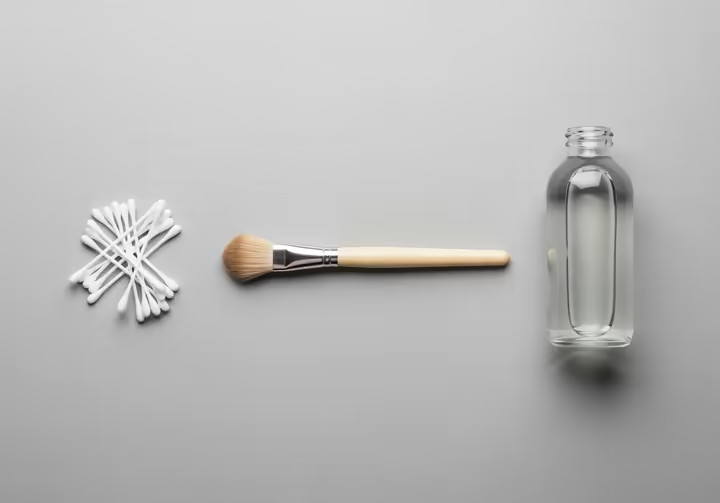
You'll also want clean, white, lint-free cotton cloths and high-quality cotton swabs. If you plan to use any liquid, it MUST be distilled water. Tap water contains minerals that can leave a damaging, hazy film on the surface when they dry.
What to AVOID at All Costs
This is important, so listen up. NEVER use commercial household cleaners, like sprays, wipes, or detergents. They are designed to cut kitchen grease and can easily dissolve or permanently damage the varnish and paint.
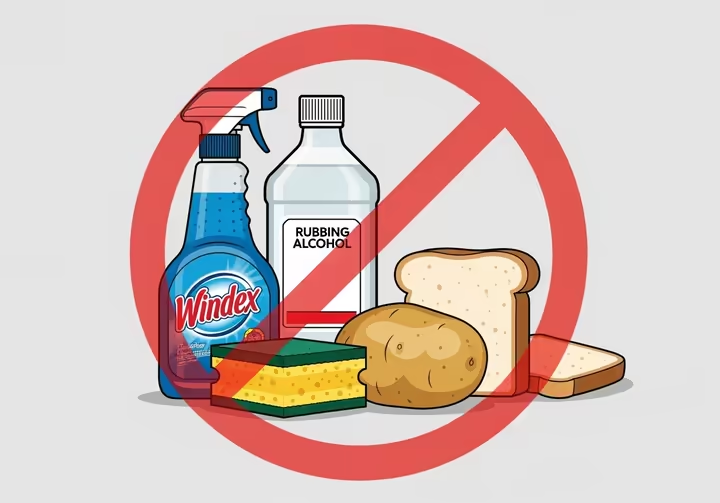
Also on the "no" list: rubbing alcohol (it's basically a paint stripper!), paper towels (they leave lint), and stiff brushes or sponges (they create microscopic scratches). And please, ignore old myths about cleaning with a potato or bread. You'll just leave a starchy, sugary residue that attracts insects and encourages mold growth.
Using any type of oil (olive, baby, or linseed) is also a terrible idea. These oils never dry, creating a permanently sticky film that grabs onto more dust and becomes impossible to remove without taking the original paint with it.
The Step-by-Step Cleaning Guide
Always start with the safest, least invasive method first. The goal is to do as little as possible. You can always stop, but you can't undo damage.
1. Dry Surface Cleaning
This is the safest first step, and often, the only one you'll need. This should be the only step you take for any unvarnished painting or one that shows any signs of flaking.
Hold the painting upright and use your soft brush to gently sweep dust off the surface, starting from the top and working your way down. Use NO pressure. An oil painting is fabric on a frame, and pushing on it can easily create dents or crack the brittle, aged paint.
2. The Spit-Cleaning Method (Seriously)
Okay, this sounds weird, but it's a real technique used by professional conservators. Your saliva is a complex, mild enzymatic solution. It's surprisingly effective at gently breaking down the organic gunk on a painting's surface, like the film from tobacco smoke.
To do it right, don't eat or drink anything (except water) for at least 30 minutes beforehand. Never apply saliva directly to the painting, instead, moisten a fresh cotton swab in your mouth. Gently roll the damp swab over a small, one-inch square test area, don't scrub.
As soon as a swab looks dirty, discard it and use a fresh one. CRITICAL STEP: you have to "clear" the area. Immediately after cleaning a patch with saliva, take a new swab, dampen it slightly with distilled water, and gently roll it over the exact same spot to remove the residual enzymes and loosened grime.
3. A Gentle Aqueous Solution (The Last Resort)
This is your absolute last-ditch option, and it's risky. Only consider this if the painting is definitely varnished, has passed the spot test, and hasn't responded to the other methods. Water can cause a ton of long-term problems, from swelling to flaking.
If you proceed, be meticulous. Mix a small amount of distilled water with just a few drops of a mild, pH-neutral soap. Dip a cotton swab in the solution, then press it until it's barely damp, the surface should never look wet.
Work on a single square inch at a time. Roll the damp soap swab, then immediately follow with a "rinse" swab (dampened with just distilled water), and then a completely dry swab to blot away moisture. This slow, three-part sequence, clean, rinse, dry, is the only way to minimize the risks.
Case Study: Cigarette Smoke Grime
A painting darkened by years of cigarette smoke is a perfect example of the limits of at-home cleaning. The grime from tobacco smoke isn't just dust, it's a complex, sticky, and acidic chemical film of tar and nicotine that bonds with and penetrates the varnish layer. Over time, it can even make the paint brittle.
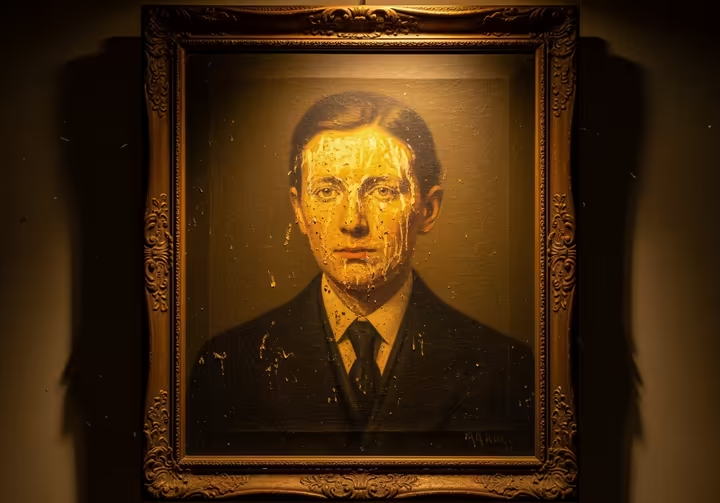
Faced with this, gentle home methods are not enough. The saliva method may have some limited success on the freshest layer, but it can't break down the deeply embedded tar film. A mild soap solution is also useless against the oily tar.
Trying to scrub harder is one of the fastest ways to cause permanent damage. The reality is, removing a heavy nicotine film is the same as a full varnish removal. A professional conservator does this with carefully formulated solvent mixtures, a delicate chemical operation that's far beyond the scope of at-home care.
Final Steps and Aftercare
Let It Dry Properly
After any wet cleaning, no matter how gentle, the painting must be allowed to dry slowly and thoroughly. Stand it upright in a well-ventilated room, away from direct heat sources like radiators or vents, and out of direct sunlight.
The ideal environment is one with a stable temperature (around 65–75°F or 18–24°C) and stable humidity (40% to 60%). Big swings in humidity are especially dangerous, as they cause the canvas and wood to expand and contract, creating stress that leads to new cracks.
Don't Even Think About Varnishing
You might be tempted to apply a fresh layer of varnish to make your newly cleaned painting look shiny. DON'T. Under any circumstances, a beginner must not attempt this.
Oil paint doesn't "dry" by evaporation, it "cures" through a slow chemical reaction with oxygen that can take anywhere from six months to several years. Applying varnish before the paint is fully cured will seal it off from the air, suffocating it and leaving it permanently weak.
The new varnish will also chemically bond with the uncured paint, making it impossible for a future conservator to ever remove the varnish without also destroying the original paint. Judging when a painting is truly cured requires an expert eye. For you, the project is done once the surface is clean.
The Final Word: Be Careful!
The main takeaway here should always be caution. The process starts with a careful assessment, proceeds with the least invasive method possible, and stops when you reach the limit of that method.
The goal is the long-term preservation of the art, not just a quick cosmetic fix. Every decision should be guided by a simple principle: intervene as little as possible.
Knowing when to stop and call a professional conservator is the most important skill you can have. It isn't an admission of failure, it's the mark of a truly responsible owner. When in doubt, leave it to the experts.
Works cited
- Request: How to clean an oil painting? : r/howto - Reddit, https://www.reddit.com/r/howto/comments/1er0da/request_how_to_clean_an_oil_painting/
- Cleaning Paintings: Precautions – Canadian Conservation Institute (CCI) Notes 10/1, https://www.canada.ca/en/conservation-institute/services/conservation-preservation-publications/canadian-conservation-institute-notes/cleaning-paintings-precautions.html
- When Do You Call an Art Conservator? - Coyle Studios, https://restoreoldphotosnow.com/when-do-you-call-an-art-conservator/
- What Does It Mean to Have a Painting Restored and How Do I Pick a Conservator?, https://mci.si.edu/what-does-it-mean-have-painting-restored-and-how-do-i-pick-conservator
- 6 Types of Art Damage | John Canning & Co., https://johncanningco.com/blog/6-types-of-art-damage/
- Can craquelure determine attribution? - Art History News - by Bendor Grosvenor, https://www.arthistorynews.com/articles/4444_Can_craquelure_determine_attribution
- How to Prevent Cracks in Oil Paintings: Essential Conservation Tips - Mavenart.com, https://www.mavenart.com/blog/preventing-cracks-in-oil-paintings/
- Common problems that affect oil paintings - Fine Art Restoration Company, https://fineart-restoration.co.uk/guides-and-advice/common-problems-that-affect-oil-paintings/
- Should You Clean an Oil Painting Yourself? Here's What You Need ..., https://townquaystudios.co.uk/should-you-clean-an-oil-painting-yourself-heres-what-you-need-to-know/
- Ultimate guide to varnishing your oil paintings - Winsor & Newton, https://www.winsornewton.com/blogs/guides/varnishing-oil-paintings
- Caring for paintings - Canada.ca, https://www.canada.ca/en/conservation-institute/services/preventive-conservation/guidelines-collections/paintings.html
- Why Varnish Your Oil Paintings? - Lori McNee, https://lorimcnee.com/why-varnish-your-oil-paintings/
- Cleaning old oil painting | The Picture Framers Grumble, https://www.thegrumble.com/threads/cleaning-old-oil-painting.16461/
- The Importance of Varnishing Oil Paintings, https://teresabernardart.com/varnishing-oil-paintings/
- Varnish canvas bourne art | The Picture Framers Grumble, https://www.thegrumble.com/threads/varnish-canvas-bourne-art.43663/
- Is it necessary to varnish oil paintings? : r/oilpainting - Reddit, https://www.reddit.com/r/oilpainting/comments/1e1fykr/is_it_necessary_to_varnish_oil_paintings/
- DO WE NEED TO VARNISH AN OIL PAINTING? - Studio Six Art Supplies, https://studio-six.com/blogs/studio-six/varnishing-do-we-need-to-varnish-an-oil-painting
- to varnish or not to varnish, that is the question : r/oilpainting - Reddit, https://www.reddit.com/r/oilpainting/comments/17xj6md/to_varnish_or_not_to_varnish_that_is_the_question/
- www.whataportrait.com, https://www.whataportrait.com/blog/how-to-clean-an-oil-painting/#:~:text=Spot%20Testing,bottom%20corner%20of%20the%20canvas.
- How to Clean an Oil Painting Safely: Best Methods and Techniques, https://www.whataportrait.com/blog/how-to-clean-an-oil-painting/
- How to clean dirt and dust from oil painting? : r/oilpainting - Reddit, https://www.reddit.com/r/oilpainting/comments/mher8s/how_to_clean_dirt_and_dust_from_oil_painting/
- Dirt and Dirt Removal (Dry and Aqueous Cleaning) - Paintings conservation - Cultural Heritage Agency of the Netherlands, https://english.cultureelerfgoed.nl/binaries/cultureelerfgoed-en/documenten/publications/2022/01/01/dirt-and-dirt-removal/Surface+Dirt+Removal.pdf
- How to Clean an Old Oil Painting Affected by Cigarette Smoke, https://art-and-see.com/blogs/oil-painting-essentials/how-to-clean-an-old-oil-painting-affected-by-cigarette-smoke
- How to Clean an Oil Painting - Rise Art, https://www.riseart.com/guide/2395/how-to-clean-an-oil-painting
- Art conservation: how to restore an oil painting - Royal Museums Greenwich, https://www.rmg.co.uk/stories/art-culture/conservation-process-royal-visit-fleet
- Dusting Paintings: Proper Techniques to Preserve Artworks, https://www.naturalpigments.com/artist-materials/dusting-paintings
- Gainsborough Products, LLC Oil Painting Restoration and Conservation Supplies Catalog, http://www.gainsboroughproducts.com/gains_catalog.html
- Cleaning a water stained painting : r/oilpainting - Reddit, https://www.reddit.com/r/oilpainting/comments/1iux8ho/cleaning_a_water_stained_painting/
- How to clean an oil painting | P55.ART, https://www.p55.art/en/blogs/p55-magazine/how-to-clean-an-oil-painting
- How to Clean Oil Paintings: Safe Techniques for Care and Restoration, https://www.naturalpigments.com/artist-materials/cleaning-oil-paintings
- How Not to Clean an Oil Painting - Lori McNee - Fine Art & Tips, https://lorimcnee.com/how-not-to-clean-an-oil-painting/
- 3 Art Materials Oil Painters Should Avoid | Master Oil Painting, https://www.masteroilpainting.com/3-art-materials-oil-painters-should-avoid/
- Fell in love with this oil painting from an antique shop, but it needs some serious love. : r/CleaningTips - Reddit, https://www.reddit.com/r/CleaningTips/comments/rk5d9p/fell_in_love_with_this_oil_painting_from_an/
- How to Safely Clean an Oil or Acrylic Painting on Canvas? - MN Support Services Ltd, https://www.mnssltd.co.uk/painting-canvas-cleaning-guide/
- Cleaning An Oil Painting - The Chat Board - The Well-Trained Mind Community, https://forums.welltrainedmind.com/topic/716386-cleaning-an-oil-painting/
- Spit on Art - Mediamatic, https://www.mediamatic.net/nl/page/368355/spit-on-art
- How to Clean a Painting with Saliva - YouTube, https://www.youtube.com/watch?v=bLUf9HOqaV8
- Enzymes as tools for conservation of works of art / Casoli, Antonella. - Unipr, https://air.unipr.it/bitstream/11381/2895894/9/CULHER%20enzimi.pdf
- How to Clean and Protect Paintings: What You Need to Know - AGI Fine Art, https://agifineart.com/advice/cleaning-and-protecting-paintings-what-you-need-to-know/
- Aqueous Cleaning of Paintings: Safe Water-Based Methods for Art - Natural Pigments, https://www.naturalpigments.com/artist-materials/aqueous-cleaning-paintings
- www.inlineovals.com, https://www.inlineovals.com/blog/how-to-clean-an-old-oil-painting-with-simple-household-items/#:~:text=Cloth%2D%20Use%20a%20gentle%20cleaning,pick%20up%20dust%20and%20grime.
- Clean Oil Paintings like a Pro: Here's How! - KunstLoft Magazine, https://www.kunstloft.com/magazine/how-to-clean-oil-paintings/
- Nicotine & Oil Paints | The Picture Framers Grumble, https://www.thegrumble.com/threads/nicotine-oil-paints.3041/
- How to make oil paint dry faster: 10 techniques and factors to master - Whataportrait, https://www.whataportrait.com/blog/methods-to-dry-oil-paint-faster/
- Oil Paint Drying Times - A Guide for Homeowners, https://agpaintingflorida.com/blog/oil-paint-drying-times/
- How to Clean and Preserve Oil Paintings: A Comprehensive Guide, https://naturalist.gallery/blogs/faq/how-to-clean-and-preserve-oil-paintings-a-comprehensive-guide
- Humidity on Oil Painting - Preserve Art Integrity and Longevity ..., https://paintingbestpractices.com/humidity-on-oil-painting/
- Oil Paint Drying: Techniques, Tips, and Answers to Common Questions - Mavenart.com, https://www.mavenart.com/blog/oil-paint-drying-techniques-tips/
- How to Varnish an Oil Painting? 7 Questions for every Artist, https://willkempartschool.com/how-to-varnish-an-oil-painting/
- To Varnish or Not to Varnish? - Oil Painting - DPW Art Talk - A Daily ..., https://arttalk.dailypaintworks.com/t/to-varnish-or-not-to-varnish/867
- The Truth About Varnishing Oil Paintings: Why You Should Wait 6 Months #oilpaint #varnish #gamvar - YouTube, https://www.youtube.com/shorts/D_ydz0DPCiI
- A Primer for the Materials, Methods and Techniques of Conservation - North Carolina Museum of Art, https://ncartmuseum.org/wp-content/uploads/2021/06/conservation-primer.pdf
- Art Conservation Training: How to Preserve and Restore Art with Art Conservation Training - FasterCapital, https://fastercapital.com/content/Art-Conservation-Training--How-to-Preserve-and-Restore-Art-with-Art-Conservation-Training.html
- What is Art Conservation? - MACC, https://preserveart.org/education/what-is-conservation/
- Conservation Ethics in Art - Number Analytics, https://www.numberanalytics.com/blog/conservation-ethics-in-art
- Ethics in Art Conservation - Number Analytics, https://www.numberanalytics.com/blog/ultimate-guide-to-professional-ethics-in-art-conservation