How to Create Emotional Art: A Beginner's Guide
Want to make art that connects with people? This guide covers the basic tools, think color, lines, and light, that artists use to express feelings without saying a word. It's about making art that feels honest.
What is 'Emotional Art,' Anyway?
Before written languages, images gave form to our feelings. 1 "Emotional art" isn't a specific style. It's the quality that makes a piece feel human and stick with you long after you've looked away.
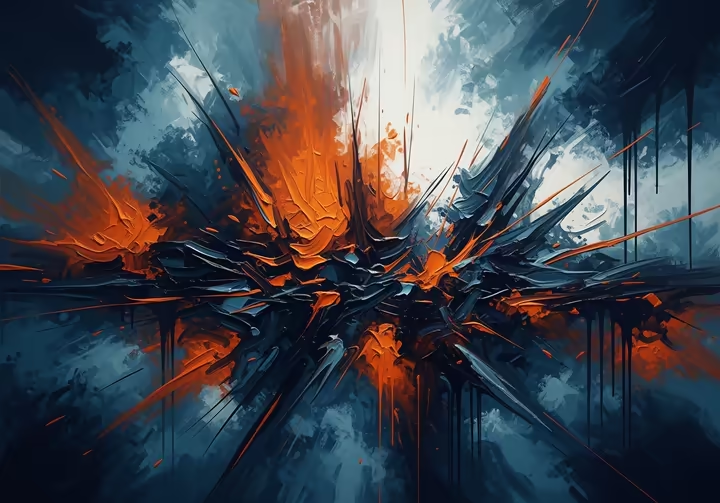
How does it work? Some think art shows the artist's feelings. Others say it's made to make the audience feel something. A third idea is that the art itself holds an emotion, separate from anyone. 2
The magic happens somewhere in the middle. An artist has an intention, but you (the viewer) bring your own history, memories, and mood to the artwork. 3 The artist lights the match... you provide the emotional firewood.
So your goal isn't to perfectly transmit one single feeling. It's to create a work that invites people to explore their own emotions. Whether it's the dread in Edvard Munch's The Scream or the quiet of an abstract painting, the power is in connecting with the human experience. 1
The Artist's Toolkit for Feelings
To show feelings without words, artists use a toolkit of visual language. These are the basics: color, line, light, composition, texture, and symbols. Learning to use them is the first step toward giving your work real emotional power.
This isn't a simple formula like "blue equals sad." It's about understanding how each element works and making them play together to create a mood. The art is in how the whole thing works together.
The Psychology of Color
Color is the quickest way to set a mood. 5 Our response is tied to both cultural ideas and gut reactions. The basic difference is between warm and cool colors.
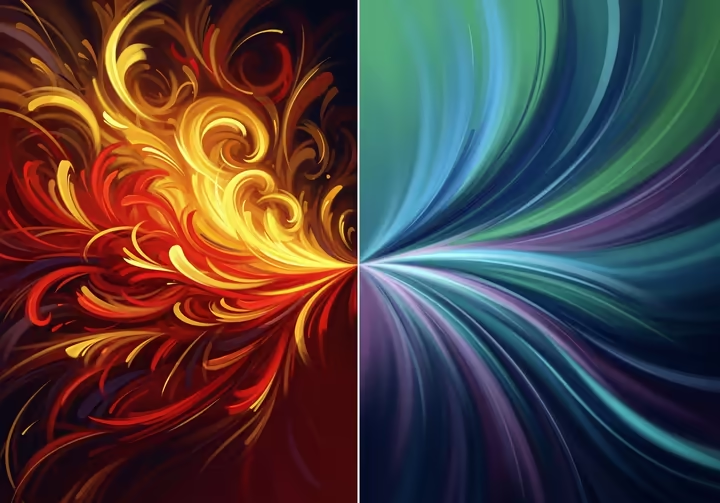
Warm colors (reds, oranges, yellows) feel energetic, passionate, and happy, and they seem to jump out at you. 5 A bright yellow can feel like sunlight, but too much can feel anxious. 7 Red means love or passion... but also anger and danger. 5
Cool colors (blues, greens, purples) often feel calm, stable, or serene, but they can also suggest sadness. 7 The intensity (saturation) and brightness of a color also matter. Highly saturated colors feel energetic, while muted colors can feel somber or nostalgic. 5
The Language of Line and Shape
A single line can show an emotion instantly. 9 It’s basically a record of energy. Our brains are wired to read that energy.
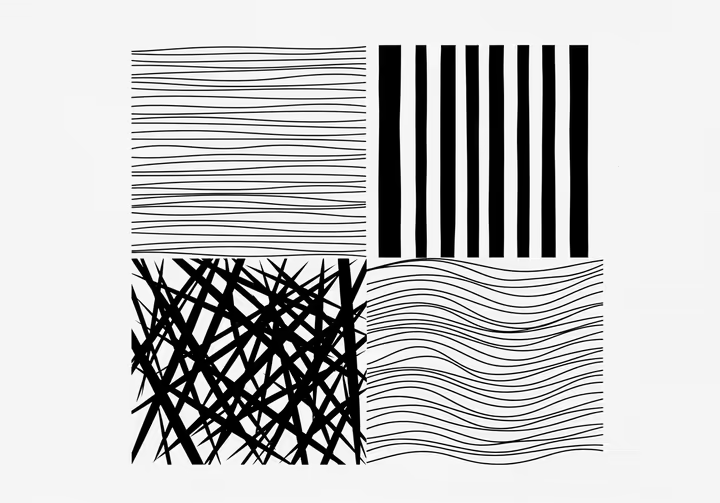
Long, smooth, horizontal lines feel calm and stable, like the horizon. 10 Strong vertical lines suggest height, strength, and order. 11 In contrast, sharp, jagged lines speak of chaos and anxiety. 10
Soft, curved lines suggest comfort and natural movement. 11 Geometric shapes like squares feel orderly and secure, while irregular shapes feel more natural and free. 11 The jagged lines and broken shapes in Picasso's "Weeping Woman" work together to show the subject's shattered emotional state. 10
The Drama of Light and Shadow
The mix of light and shadow, called value or tone, is key to creating mood. High contrast between the lightest lights and darkest darks adds drama, mystery, and tension. 12
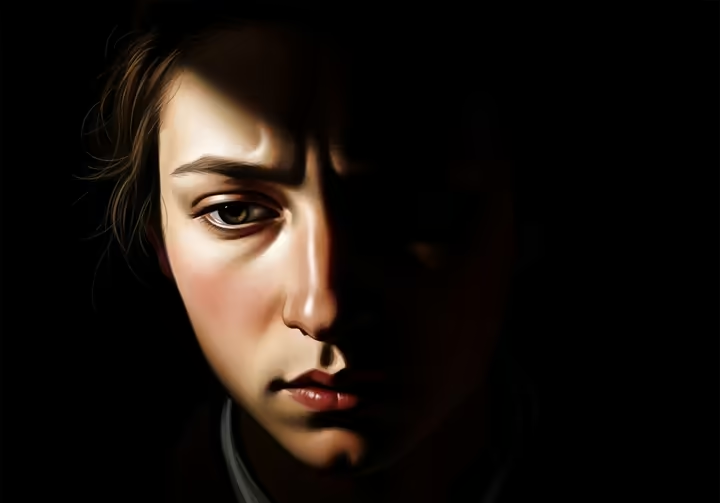
This technique is called chiaroscuro (Italian for "light-dark"). Artists like Caravaggio used a single, strong light to spotlight subjects in a sea of shadow, making the scene feel intense. 12 The stark contrast can symbolize struggles like good vs. evil or life vs. death. 13
Low-contrast work with soft, diffused light feels different. Gentle shifts from light to dark can create a sense of peace, tranquility, or dreaminess. This soft light creates a quieter mood for reflection.
Arranging Things to Create a Mood
Composition is how you arrange stuff in your artwork. This arrangement guides the viewer's eye and, more importantly, their feelings.
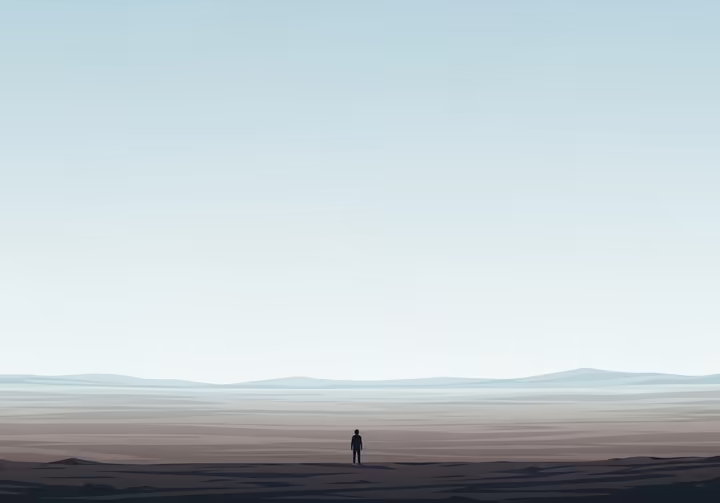
A crowded, cluttered composition can feel chaotic, oppressive, or claustrophobic. 14 The viewer's eye has no place to rest. On the other hand, using lots of empty space (negative space) can be just as effective.
A small figure in a large, empty landscape can feel incredibly lonely... or peaceful and free. 16 The balance between the subjects (positive space) and the empty areas (negative space) builds the artwork's emotional structure. 16
The Feeling of Texture and Brushwork
How paint is put on a surface is a direct way to show emotion. The texture of a painting, real or implied, can get a physical reaction from the viewer, making the work feel more immediate. 19
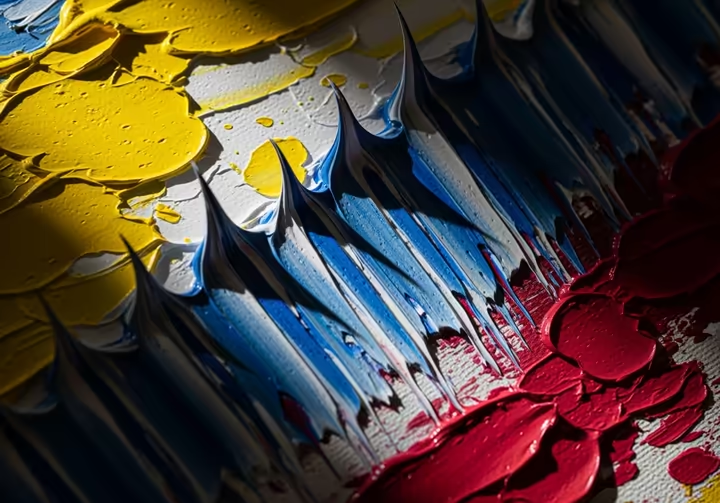
Impasto is a technique of applying paint in thick layers so you can see the brush or knife strokes. It's great for showing raw emotion and energy. 20 The visible strokes record the artist's gestures, turning the painting into a performance. 21
The thick paint in a Van Gogh sky both depicts the sky and lets the viewer feel the artist's frantic energy. This is very different from a smooth, meticulously blended surface, which creates a calm, quiet mood. A raw texture invites you in, while a smooth one encourages detached admiration.
Symbolism and Subject Matter
What you choose to draw or paint sets an emotional stage. But symbolism, using objects or figures to represent abstract ideas, adds another layer of meaning. 22

A wilting flower can symbolize mortality. A gathering storm can represent inner turmoil. A lone figure might stand for isolation or independence.
Symbols can be universal (a dove for peace), cultural, or deeply personal to the artist. 23 The most effective art fuses a symbolic subject with all the other tools. It’s this fusion of what is depicted with how it is depicted that creates an unforgettable emotional impact.
Learning from the Greats
Theory is one thing, but looking at famous artworks shows you how it's done. These artists weren't just painting what they saw, they were building an emotional experience for the viewer.
To do this, they often had to exaggerate, distort, or ignore a literal depiction of reality. They understood the goal was to show the truth of a feeling, and they bent reality to serve that purpose.
Edvard Munch's "The Scream"
Edvard Munch's The Scream is the ultimate icon of modern anxiety. 25 Its power comes from how Munch used the entire canvas to show an internal state of psychic horror. The bridge's weird perspective makes you feel dizzy and unstable. 4
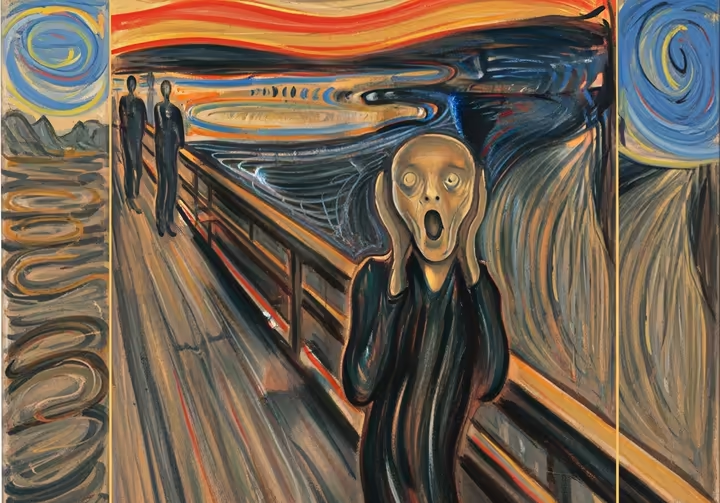
The central figure is skeletal and distorted in agony, hands over its ears to block a sound. 4 But the scream seems to come from the figure and emanate from the world itself.
Munch uses swirling, convulsive lines in the landscape and sky, making nature itself seem to be in turmoil. The clashing, non-realistic colors, like the fiery "blood red" sky, amplify the feeling of chaos. 25 This makes the viewer both a witness to the anguish and a participant in it. 25
Käthe Kollwitz's "Woman with Dead Child"
In her 1903 etching Woman with Dead Child , Käthe Kollwitz shows the universal weight of a mother's grief in one devastating image. 27 Instead of the peaceful, angelic tradition of a Christian pietà , Kollwitz presents a raw, almost animalistic sorrow. 28
Her main tools are line and form. She uses dense networks of scratched, raw lines and stark contrasts to create a physical sense of pain. 28 The composition is claustrophobic.
The naked mother envelops her child, her body contorted into a single form of despair that seems to press out of the picture and into your space. 27 By stripping the scene of any specific story, Kollwitz turns a personal tragedy into a universal statement on loss, love, and survival. 29
Mark Rothko's "No. 14, 1960"
An abstract painting by Mark Rothko might not seem emotional at first. Yet his work offers a direct emotional experience by using just color and scale. 30
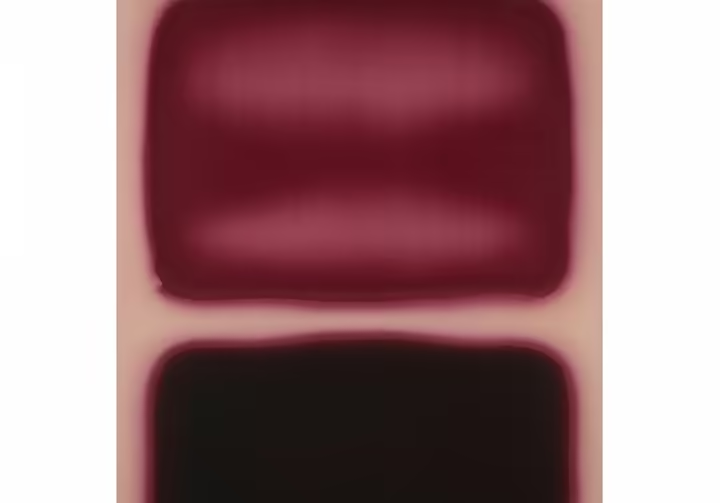
No. 14, 1960 is huge, nearly nine feet tall, designed to fill your field of vision and create an environment. 31 It’s just two large, hovering rectangles of color, a deep maroon-red over a darker rectangle.
The soft, blurry edges make them seem to shimmer and pulsate, creating a sense of depth. 16 The experience is primal, not intellectual, and can bring up feelings of tragedy, doom, or spiritual transcendence. 32 Rothko himself said, "I have imprisoned the most utter violence in every inch of their surface". 32
Okay, Your Turn: A Simple Project
Now it's time to try it yourself. The biggest hurdle for beginners is the fear of not being "good enough." This project is designed to get rid of that pressure.
The goal is to capture an internal emotional state, not a perfect physical likeness. The value is in the process of making conscious, emotionally-driven choices, not the final product. You're learning to feel something and then translate it visually.
Start an "Emotional Self-Portrait." Take a quiet moment and pick one specific emotion you're feeling or want to explore, joy, anxiety, confusion, whatever. Hold that feeling in your mind. Instead of looking in a mirror, use the toolkit to capture that feeling.
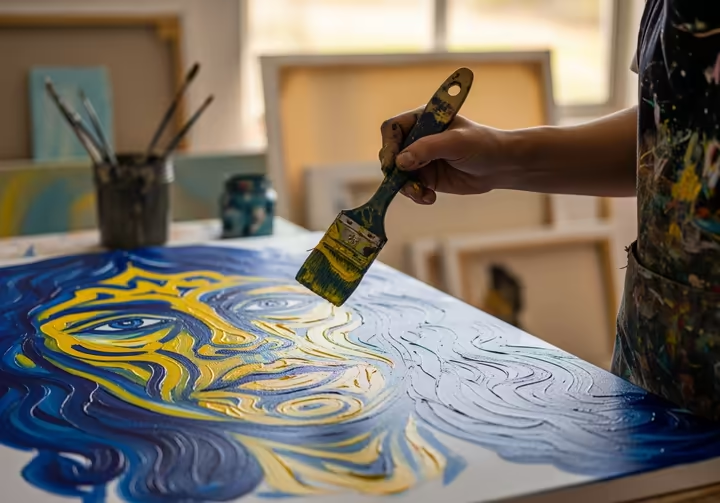
What is the color of this feeling, a single vibrant hue, or a mix of muted tones? 7 What kind of lines would it make, sharp and jagged, or long and flowing? 10
How much space does the feeling take up in the composition ? 15 Should it fill the page, or be a small form in a vast, empty space? And how will you apply your medium, with thick, energetic brushstrokes or smooth, careful blending? 19
Work freely and honestly. Judge the outcome on its emotional truth, not its realism. This one project takes you through the whole creative cycle, from feeling to mark-making.
Going Deeper: Tricky Feelings
As you practice, you'll get better at showing more complex emotions. You'll learn the difference between real emotional depth and cheap sentimentality. Sentimentality relies on clichés to get an easy emotional reaction, presenting feelings as simple and pure. 33
Real emotional depth, however, is honest about the full, messy spectrum of human experience. It acknowledges the "shadow sides," like envy, conflict, and sorrow, that make moments of joy more meaningful. 33 True emotional art is honest, and honesty is rarely simple.
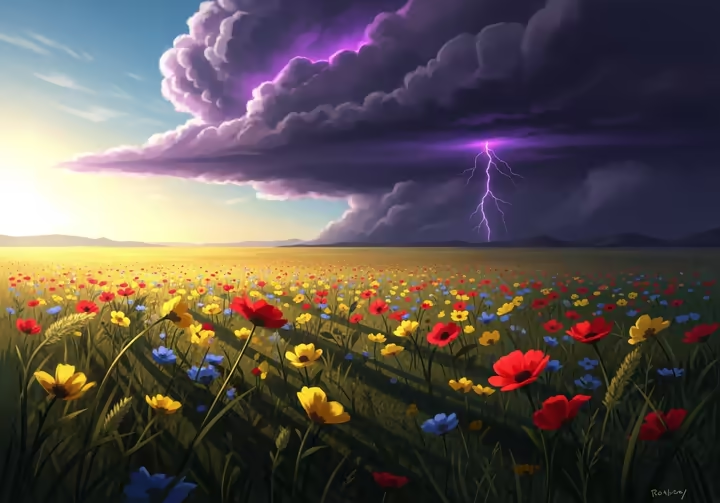
The most profound art often holds conflicting emotions at the same time, sometimes called "emotional ambivalence." 34 An artwork might feel both beautiful and terrifying, or hopeful and melancholic. Edvard Munch's painting Love and Pain is a great example, showing an embrace that is at once tender and dangerous, an act of comfort that could also be an act of surrender. 35
Developing an emotional voice in your art is a lifelong journey of practice, observation, and self-discovery. 36 It's a process of learning to listen to your own complex feelings and finding the visual language to give them form. It is both a tool for expressing the emotions you already understand and a powerful method for exploring the ones you don't. 37
Works cited
- Art and emotion - Wikipedia, https://en.wikipedia.org/wiki/Art_and_emotion
- What is the Connection between Artworks and Emotions ..., https://press.rebus.community/intro-to-phil-aesthetics/chapter/what-is-the-connection-between-artworks-and-emotions/
- The role of the viewer in the construction of meaning | History of Art Criticism Class Notes, https://library.fiveable.me/history-of-art-criticism/unit-9/role-viewer-construction-meaning/study-guide/oD6wraMNUyCHDJLY
- "The Scream" by Munch: The Profound Depths of Human Despair | 1st Art Gallery, https://www.1st-art-gallery.com/article/the-analysis-of-munchs-the-scream/
- The Impact of Colour Psychology in Visual Arts | Byard Art, https://byardart.co.uk/impact-of-colour-psychology-in-visual-arts/
- byardart.co.uk, https://byardart.co.uk/impact-of-colour-psychology-in-visual-arts/#:~:text=Colour%20psychology%20is%20a%20pivotal,and%20even%20alter%20our%20behaviour.
- Understanding Colour Psychology - Louise De Masi Watercolour Art, https://www.louisedemasi.com/insights/2024/6/18/understanding-colour-psychology
- Enjoying art: an evolutionary perspective on the esthetic experience from emotion elicitors, https://pmc.ncbi.nlm.nih.gov/articles/PMC10925773/
- www.1st-art-gallery.com, https://www.1st-art-gallery.com/article/lines-of-emotion-how-contour-shapes-impact-mood/#:~:text=Soft%20or%20hard%2C%20repetitive%20or,tension%2C%20energy%2C%20or%20sadness.
- The Visual Elements - Line - Arty Factory, https://www.artyfactory.com/art_appreciation/visual-elements/line.html
- Psychology of Line, Shape, Colors, Textures, size, and Fit in Design - 670 AM KIRN Radio, https://www.socalpersian.com/2025/03/14/psychology-of-line-shape-colors-textures-size-and-fit-in-design/
- Chiaroscuro: Harnessing the Power of Strong Contrast in Painting | Angela Edwards, https://www.angelaedwards.co.uk/chiaroscuro-harnessing-the-power-of-strong-contrast-in-painting/
- Mastering Chiaroscuro in Art - Number Analytics, https://www.numberanalytics.com/blog/ultimate-guide-chiaroscuro-art-history
- www.numberanalytics.com, https://www.numberanalytics.com/blog/the-art-of-spatial-expression#:~:text=How%20Space%20Can%20Be%20Used,feelings%20of%20anxiety%20or%20chaos.
- The Art of Spatial Expression - Number Analytics, https://www.numberanalytics.com/blog/the-art-of-spatial-expression
- The Power of Negative Space - Number Analytics, https://www.numberanalytics.com/blog/power-of-negative-space-art
- The Power of Negative Space in Composition: A Guide for Artists - Irish Artmart, https://irishartmart.ie/the-power-of-negative-space-in-composition-a-guide-for-artists/
- Negative Space: Abstract Art's Unseen, Powerful Secret Weapon, https://www.zenmuseum.com/finder/page/role-of-negative-space-abstract-art
- The Art of Impasto: Adding Emotion to Your Drawings - Number Analytics, https://www.numberanalytics.com/blog/the-art-of-impasto-adding-emotion-to-your-drawings
- Understanding Impasto | A Study of Technique and Texture in Painting | Angela Edwards, https://www.angelaedwards.co.uk/understanding-impasto-a-study-of-technique-and-texture-in-painting/
- Impasto Art 101: How Thick Paint Creates Texture, Emotion, and Movement - Artsology, https://artsology.com/blog/2025/06/impasto-painting-technique/
- Exploring the Depths of Imagination: The Enduring Legacy of Symbolism in Art, https://www.edenart.com/news/exploring-the-depths-of-imagination-the-enduring-legacy-of-symbolism-in-art
- Art Notes: Exploring the Basics of Symbolism in Art - 1st Art Gallery, https://www.1st-art-gallery.com/article/art-notes-exploring-the-basics-of-symbolism-in-art/
- Symbolism in Contemporary Art: A Continuum of Coded Language - Collector's Corner, https://art-mine.com/collectors-corner/2023/09/symbolism-in-contemporary-art-a-continuum-of-coded-language/
- The Scream - Wikipedia, https://en.wikipedia.org/wiki/The_Scream
- www.1st-art-gallery.com, https://www.1st-art-gallery.com/article/the-analysis-of-munchs-the-scream/#:~:text=The%20composition%20creates%20a%20sense,a%20sense%20of%20emotional%20intensity.
- www.moma.org, https://www.moma.org/collection/works/273959#:~:text=Woman%20with%20Dead%20Child%20is%20a%20shockingly%20visceral%20portrait%20of,to%20thrust%20forward%2C%20toward%20us.
- Käthe Kollwitz. Woman with Dead Child (Frau mit totem Kind) state ..., https://www.moma.org/collection/works/273959
- Write on Art: Käthe Kollwitz's 'Woman with Dead Child' | Art UK, https://artuk.org/discover/stories/write-on-art-kathe-kollwitzs-woman-with-dead-child
- Exploring Mark Rothko's No. 14 (White and Greens on Blue) - Singulart, https://www.singulart.com/blog/en/2024/02/06/no-14-white-and-greens-on-blue-by-mark-rothko/
- Mark Rothko, No. 14, 1960, 1960 - SFMOMA, https://www.sfmoma.org/artwork/97.524/
- Exorcising Fears of the Abstract: Mark Rothko's #14, “Serenity About to Explode” | Artsy Rambler, https://eveonalimb2.com/2021/11/19/exorcising-fears-of-the-abstract-mark-rothkos-14-serenity-about-to-explode/
- Like sentimental artists, brands try too hard to pretend everything's rosy - Marketing Week, https://www.marketingweek.com/alain-de-botton-like-sentimental-artists-brands-try-too-hard-to-pretend-everythings-rosy/
- Ambivalent Emotional Experiences of Everyday Visual and Musical ..., https://durham-repository.worktribe.com/OutputFile/1288934
- Encountering “Love and Pain” by Edvard Munch | by Discoverer of ..., https://medium.com/masterpiece-commentary/encountering-love-and-pain-by-edvard-munch-0bc6445469ea
- Art and Emotion: Understanding the Emotional Impact of Visual Arts - Eclectic Gallery, https://eclecticgallery.co.uk/news/199-art-and-emotion-understanding-the-emotional-impact-of-exploring-the-emotional-power-of-visual-arts/
- Emotions in Contemporary Art: Key Roles Explained - White Court Art, https://www.whitecourtart.com/blog/role-of-emotions-in-contemporary-art/
- The Psychology of Art: Emotions Translated into Visual Mediums - AGI Fine Art Blog, https://agifineart.com/advice/the-psychology-of-art-emotions-translated-into-visual-mediums/